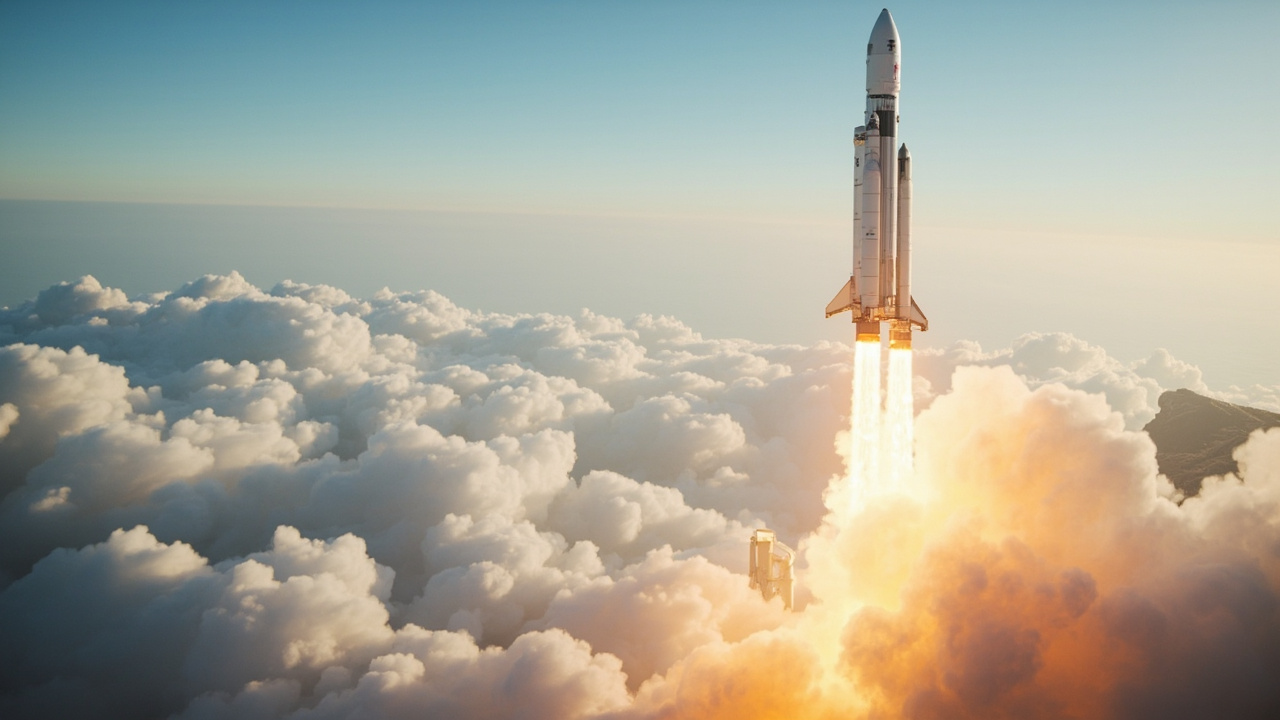
TL;DR: SpaceX launched 130 payloads on its Transporter-18 rideshare flight from California on Oct. 1, 2026.
SpaceX put 130 payloads into low Earth orbit on Oct. 1, 2026, on a dedicated rideshare flight that tested space-based computing, power beaming and satellite servicing, according to Space.com.
The mission, called Transporter-18, lifted off atop a Falcon 9 rocket from Vandenberg Space Force Base in California at 2:32 p.m. EDT, which was 11:32 a.m. local California time, according to Space.com. The launch rose through coastal fog that often covers the site.
Deployment took place in low Earth orbit. The rocket's upper stage released the payloads over a roughly 11-minute stretch starting about 54.5 minutes after launch, according to Space.com. SpaceX confirmed at 3:41 p.m. ET that the deployment sequence had concluded, according to Via Satellite.
The flight did not set a record for payloads launched at once. The current mark is 143 payloads, sent on SpaceX's Transporter-1 mission in January 2021, according to Space.com.
A California launch in a three-flight day
Transporter-18 was the second leg of a planned spaceflight tripleheader for SpaceX on Oct. 1, according to Space.com.
It began with the Crew-13 astronaut launch for NASA from Florida at 11:10 a.m. ET, according to Via Satellite. Crew-13 flew on a Falcon 9, according to Space.com.
Transporter-18 followed from Vandenberg Space Force Base in California at 11:32 a.m. PT, according to Via Satellite. Spaceflight Now reported liftoff from Space Launch Complex 4 East was scheduled for 11:32 a.m. PDT, or 2:32 p.m. EDT and 1832 UTC, with the rocket heading on a southerly trajectory.
The third mission was a Falcon Heavy flight for the U.S. National Reconnaissance Office, called NROL-97, according to Space.com. It was scheduled to lift off from Florida late that night, according to Space.com. Via Satellite reported that Falcon Heavy mission lifted off from Florida at 11:54 p.m. ET on Thursday.
Booster B1082 makes 25th flight
SpaceX flew the mission with Falcon 9 booster B1082, according to Spaceflight Now. The flight was its 25th, according to Space.com.
The booster had previously launched NROL-145, USSF-62 and OneWeb Launch 20, plus 21 batches of Starlink satellites, according to Spaceflight Now.
The first stage returned to Vandenberg for a landing about 7.5 minutes after liftoff, according to Space.com. The touchdown at Landing Zone 4 was the 36th landing at that site and the 665th landing of a Falcon booster to date, according to Spaceflight Now.
Spaceflight Now reported the 130 payloads were to be deployed into a polar orbit over 11 minutes starting about 54 minutes into the flight.
Google tests AI hardware in orbit
The highest-profile payload was a pathfinder spacecraft for Project Suncatcher, the AI constellation Google plans to build and operate in low Earth orbit, according to Space.com.
Planet Labs launched the prototype satellite for Project Suncatcher, described as a "moonshot" collaboration with Google, according to Via Satellite. The satellite will test how Google models and the Google Tensor Processing Unit operate in space, according to Via Satellite.
The satellite will help the project team determine how tensor processing units, or TPUs, perform in the space environment, according to Space.com. Google chips are core Suncatcher hardware, according to Space.com.
Two issues are of particular importance: how the TPUs withstand space radiation, and how efficiently heat they generate is dissipated, according to Space.com.
Planet was the largest single customer on the mission, according to Via Satellite. Planet also launched the second Tanager satellite, which tracks methane emissions in a partnership with CarbonMapper, and 18 SuperDove satellites manifested by SEOPS, according to Via Satellite.
Two tests aim to beam power
Transporter-18 carried two power-beaming demonstrations, according to Via Satellite.
StarCatcher launched Protostar, its prototype power node, according to Via Satellite. It will aim to demonstrate power beaming between free-flying spacecraft, according to Via Satellite. That would be the first demonstration of its kind, according to Via Satellite.
Cowboy Space put its Reason-1 satellite on the Falcon 9, according to Space.com. The company has AI data center ambitions, according to Space.com.
Reason-1 is designed to prove power beaming using a high-power laser to transfer energy from low Earth orbit to a receiver on the ground, according to Via Satellite. Cowboy Space said in a Sept. 28 X post that builders of space data centers must master optical systems between orbit and Earth, according to Space.com.
First servicing vehicle and new communications tests
Transporter-18 also launched Starfish Space's first Otter servicing satellite, according to Space.com.
The Washington-based company said via X on Sept. 24 that it had spent years developing, iterating and proving technologies required for affordable satellite servicing, according to Space.com. It said it was now launching Otters to work for customers in orbit, according to Space.com.
For Starfish Space, the Otter vehicle will conduct the Small Spacecraft Propulsion and Inspection Capability mission, known as SSPICY, for NASA, according to Via Satellite.
The mission also included the first satellite for Meridian Space, called First Customer LInk, which will test the company's low Earth orbit communications technology, according to Via Satellite.
CesiumAstro launched Element, the company's first effort at building full satellites, according to Via Satellite. Element is built on Cesium's own phased arrays, software-defined radios and processors, according to Via Satellite.
Fortastra launched its first demonstration spacecraft, Watchdog v0-A, according to Via Satellite.
Reentry vehicles and delayed deployments
The rest of the 130 payloads were a diverse group, consisting of cubesats, microsats, hosted payloads and two spacecraft with reentry vehicles and four orbital transfer vehicles carrying 41 of those payloads to be deployed at a later time, according to Space.com, citing SpaceX's mission description.
The mission included two reentry vehicles by Varda Space Industries, according to Via Satellite. It also carried four orbital transfer vehicles to deploy 41 payloads at a later time, according to Via Satellite.
Rideshare providers Exolaunch, SEOPS, D-Orbit and Maverick Space Systems all contributed customer satellites to the mission, according to Via Satellite.
Dhruva Space conducted integration for its LEAP-2 satellite, the company's second commercial mission, according to Via Satellite. LEAP-2 hosts multiple in-orbit demonstration missions, including work from Sodern ArianeGroup and TAPAS-1 by India-based Satleo Labs, according to Via Satellite.
NASA's Supernova Remnants and Proxies for ReIonization Testbed Experiment, called SPRITE, flew as a CubeSat on the mission, according to Spaceflight Now.
Earth observation and tracking payloads
Numerous Earth observation satellites rode on the mission for companies around the world, according to Via Satellite.
The mission launched eight satellites for Italy's IRIDE Eaglet II program, a constellation of mini Earth observation satellites, according to Via Satellite.
Tomorrow.io had two satellites on board to add to its weather monitoring constellation, according to Via Satellite. Iceye launched four synthetic aperture radar satellites and Satellogic launched four optical satellites, according to Via Satellite.
Unseenlabs had two radio frequency monitoring satellites on the mission, according to Via Satellite. They were BRO-23, part of its first generation for maritime radio frequency surveillance, and BRO-32, a second-generation microsatellite that expands radio frequency detection across sea, land and space, according to Via Satellite.
Methane monitoring company GHGSat had two satellites on board, manifested by SFL Missions, according to Via Satellite. Spanish Internet of Things connectivity company Sateliot had five satellites on board the mission, according to Via Satellite.
Sources referenced
- SpaceX launches Google AI satellite, 129 other payloads on 2nd leg of spaceflight tripleheader (video) | Space (https://www.space.com/space-exploration/satellites/spacex-google-project-suncatcher-ai-satellite-transporter-18-mission)
- The First Mission Milestones Onboard SpaceX's Transporter-18 Rideshare Launch - Via Satellite (https://www.satellitetoday.com/launch/2026/10/01/the-first-mission-milestones-onboard-spacexs-transporter-18-rideshare-launch/)