TL;DR: SpaceX launched 27 Starlink satellites from Vandenberg on Oct. 12 and was set to launch the CRS-35 station resupply flight from Cape Canaveral the next morning.
Falcon 9 returns to Starlink duty over California
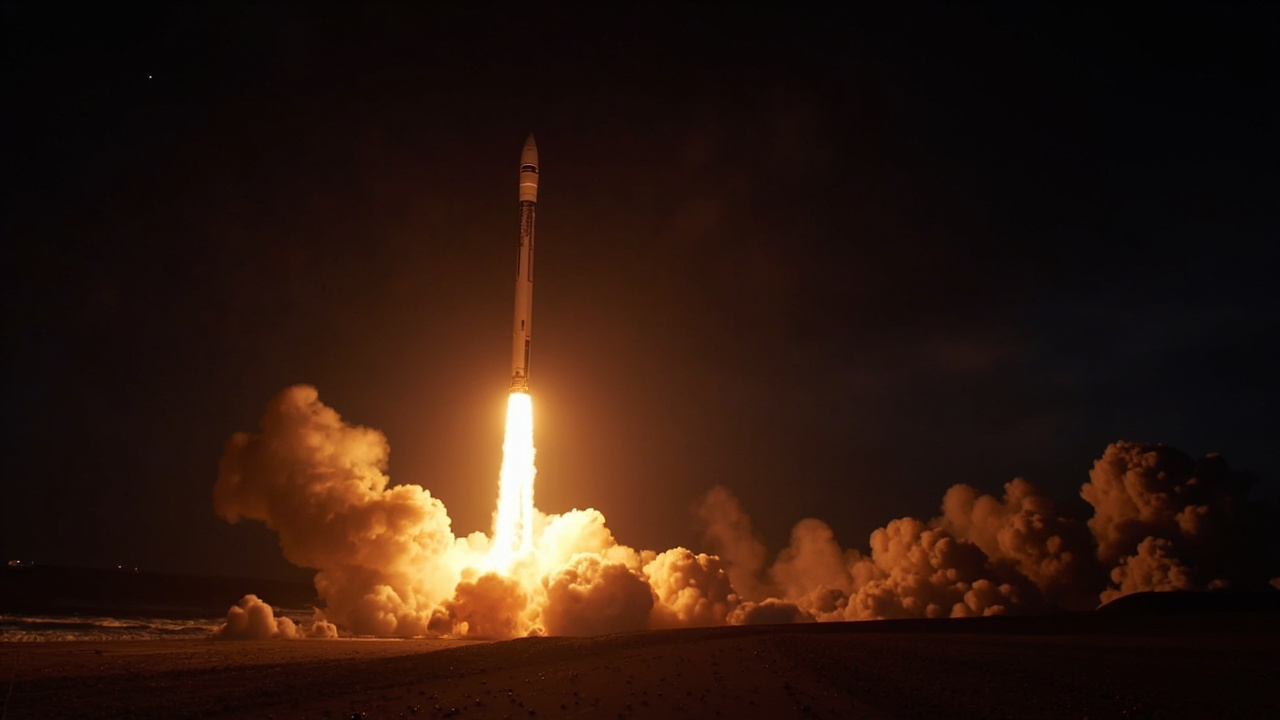
SpaceX ended a pause in dedicated Starlink flights on Oct. 12 with a Falcon 9 liftoff from Vandenberg Space Force Base in California, according to Space.com in "SpaceX launches Falcon 9 Starlink mission for 1st time in more than 3 weeks (photos)."
The rocket left the pad at 8:28 p.m. EDT, which was 5:28 p.m. local time and 0028 GMT on Oct. 13. It carried 27 Starlink internet spacecraft bound for low Earth orbit.
The mission was the first Falcon 9 Starlink launch since Sept. 19. That earlier flight also carried 27 satellites and also lifted off from Vandenberg.
The gap was unusual by recent standards. Between Aug. 19 and Sept. 6, a 19-day interval, SpaceX flew seven Falcon 9 Starlink missions.
SpaceX had placed Starlink satellites in orbit during the interval through a different vehicle. Its Starship vehicle carried 26 next-generation V3 Starlink spacecraft on its 14th test flight on Sept. 28.
That Starship flight reached orbit for the first time, and it released its satellites successfully. SpaceX founder Elon Musk has said the V3 constellation will eventually include about 100,000 satellites, with Starship carrying all of them.
What the Oct. 12 flight means for the Falcon fleet
SpaceX intends to retire Falcon 9 and Falcon Heavy during the next few years and transfer their assignments to Starship, which remains in flight testing and is fully reusable and substantially more powerful, according to Space.com.
Falcon 9 has been the most-flown launcher of its era. It flew 165 times in 2025, approximately matching the combined total of all other orbital rockets worldwide. Almost three-quarters of those flights supported Starlink.
Activity in 2026 has been slower than that pace. The Oct. 12 liftoff was the 112th Falcon 9 flight of the year and the 82nd dedicated to the Starlink network.
The Starlink network now includes more than 11,100 active satellites.
The Oct. 12 mission followed the established recovery profile. The first stage landed about 8.5 minutes after liftoff on the Pacific-based drone ship "Of Course I Still Love You."
That booster, designated B1088, completed its 20th launch and landing. The expendable upper stage continued to orbit and released the 27 satellites 62 minutes after liftoff, as announced by SpaceX through X.
Cargo Dragon queued at Cape Canaveral
One day after the Vandenberg flight, NASA and SpaceX were targeting a station logistics launch from Florida, according to NASA in "NASA Sets Coverage for SpaceX 35th Station Resupply Launch, Arrival."
The targeted time was 6:33 a.m. EDT on Tuesday, Oct. 13. A Falcon 9 with a Dragon cargo spacecraft was scheduled to lift off from Space Launch Complex 40 at Cape Canaveral Space Force Station.
The flight is the 35th SpaceX commercial resupply services mission to the orbital complex for NASA.
It was loaded with more than 6,300 pounds of supplies. NASA said the manifest includes science investigations, supplies and equipment, including the final set of International Space Station Roll-Out Solar Arrays.
Dragon was expected to dock autonomously around 11 a.m. on Thursday, Oct. 15, at the space-facing port of the station's Harmony module.
NASA planned live launch and docking coverage through multiple platforms. Launch-day coverage was to include live streaming and blog updates beginning no earlier than 6 a.m. on Oct. 13 as countdown milestones occurred, with on-demand video on NASA+ and photographs available shortly after liftoff.
The published broadcast schedule listed launch coverage beginning at 6:15 a.m. on Oct. 13 and the launch at 6:33 a.m. Arrival coverage was set for 9:15 a.m. on Oct. 15, followed by docking at 11 a.m.
Science and power hardware aboard CRS-35
Beyond the solar arrays, Dragon was set to carry hardware for producing artificial retinas in microgravity to support restoration of vision on Earth, NASA said.
It also was set to carry three-dimensional heart tissue models intended to advance large-scale drug testing on future missions.
Another portion of the cargo concerns materials research on formation of a new type of glass in microgravity.
The spacecraft also was set to carry brain organoids that could identify treatment targets for neurodegenerative diseases, including Alzheimer's, Parkinson's and multiple sclerosis.
Dragon was scheduled to remain at the station until mid-November. It was then to depart the laboratory and return to Earth with time-critical research and cargo, splashing down off the California coast.
NASA also planned a media teleconference on Thursday, Oct. 8. The briefing was to preview the cargo flight and provide a post-splashdown update for the SpaceX Crew-12 mission, which had returned to Earth that morning.
Participants listed for the 1:15 p.m. briefing were Bill Spetch, deputy manager of the Commercial, Low Earth Orbit Program; Dr. Liz Warren, deputy chief scientist in NASA's International Space Station Office; Lee Echerd, senior mission manager for Customer Operations and Integration at SpaceX; and Andreas Mogensen, leader of the Human Exploration Group at ESA, the European Space Agency.
Crew-12 home and Cygnus departure clear the way
The cargo schedule followed a rapid crew and logistics turnover, according to Launch Heaven Media Inc. in "Weekly Spaceflight Update: October 5 - October 11th."
On Oct. 8 at 11:34 a.m. EDT, the Crew Dragon Freedom splashed down in the Pacific Ocean off Los Angeles, California. Aboard were NASA astronauts Jessica Meir and Jack Hathaway, ESA astronaut Sophie Adenot and Roscosmos cosmonaut Andrey Fedyaev.
The crew spent 237 days in space after launching to the International Space Station in February.
On Oct. 9 at 12:44 p.m. EDT, Northrop Grumman's Cygnus XL spacecraft, named S.S. Steven R. Nagel, was released from the station with the Canadarm2 robotic arm.
Cygnus departed after almost six months at the station. It had delivered approximately 11,000 pounds of supplies, scientific investigations and equipment, and it carried discarded cargo scheduled for destruction during atmospheric reentry.
Space Now reported in "Starship has delivered. Flight 15 gets the harder question." that Adenot arrived at ESA's European Astronaut Centre in Cologne on Oct. 10 for postflight data collection and rehabilitation during readjustment to gravity. NASA scheduled the crew's mission discussion for Oct. 15 at 3:30 p.m. EDT.
Military relay layer grows before Starship's next test
On Oct. 10 at 12:39 a.m. PDT, SpaceX launched a Falcon 9 from SLC-4E at Vandenberg carrying 21 satellites for the U.S. Space Development Agency to low Earth orbit, according to Launch Heaven Media Inc.
The booster landed at Landing Zone 4 shortly afterward. The mission had originally been targeted for Oct. 5 before several delays.
Space Now said the Oct. 10 launch adds another orbital plane to the planned military communications network, with satellite checkout and network integration as the next steps toward operating the 21 spacecraft together.
Attention was also turning to Starship Flight 15 preparations. October 12 reporting placed those preparations in context after Flight 14 reached orbit and deployed 26 operational V3 Starlink satellites, according to Space Now.
Flight 14 also left propulsion issues to address. One booster engine and one ship engine shut down early, and the ship returned to the Pacific after just under two Earth orbits, shortening its planned mission. It maintained control through deployment, while the booster made a soft splashdown in the Gulf of Mexico.
ESA also introduced NovaMoon on Oct. 12, outlining a mission intended to improve positioning, navigation and timing for lunar rovers, landers and astronauts. It would build on Lunar Pathfinder and Moonlight with differential corrections, positioning accurate to less than a metre, and a lunar time-reference laboratory.
Space Now listed upcoming watches after Oct. 12, including Starlink Group 15-25 on a Falcon 9 targeting 00:11 UTC on Oct. 13 from Vandenberg with 27 satellites, Dragon CRS-35 targeting 10:33 UTC on Oct. 13 from Cape Canaveral, and USSF-481 on a Falcon 9 targeting 23:44 UTC on Oct. 15 from Vandenberg for a classified mission to polar orbit with a drone-ship landing attempt planned.
Sources referenced
- SpaceX launches Falcon 9 Starlink mission for 1st time in more than 3 weeks (photos) | Space (https://www.space.com/space-exploration/launches-spacecraft/spacex-launches-falcon-9-starlink-mission-for-1st-time-in-more-than-3-weeks-photo)
- NASA Sets Coverage for SpaceX 35th Station Resupply Launch, Arrival - NASA (https://www.nasa.gov/news-release/nasa-sets-coverage-for-spacex-35th-station-resupply-launch-arrival/)