TL;DR: SpaceX launched 21 Northrop Grumman data satellites for the military on Oct. 10 after a five-day delay, while NASA opened final bidding for private space stations.
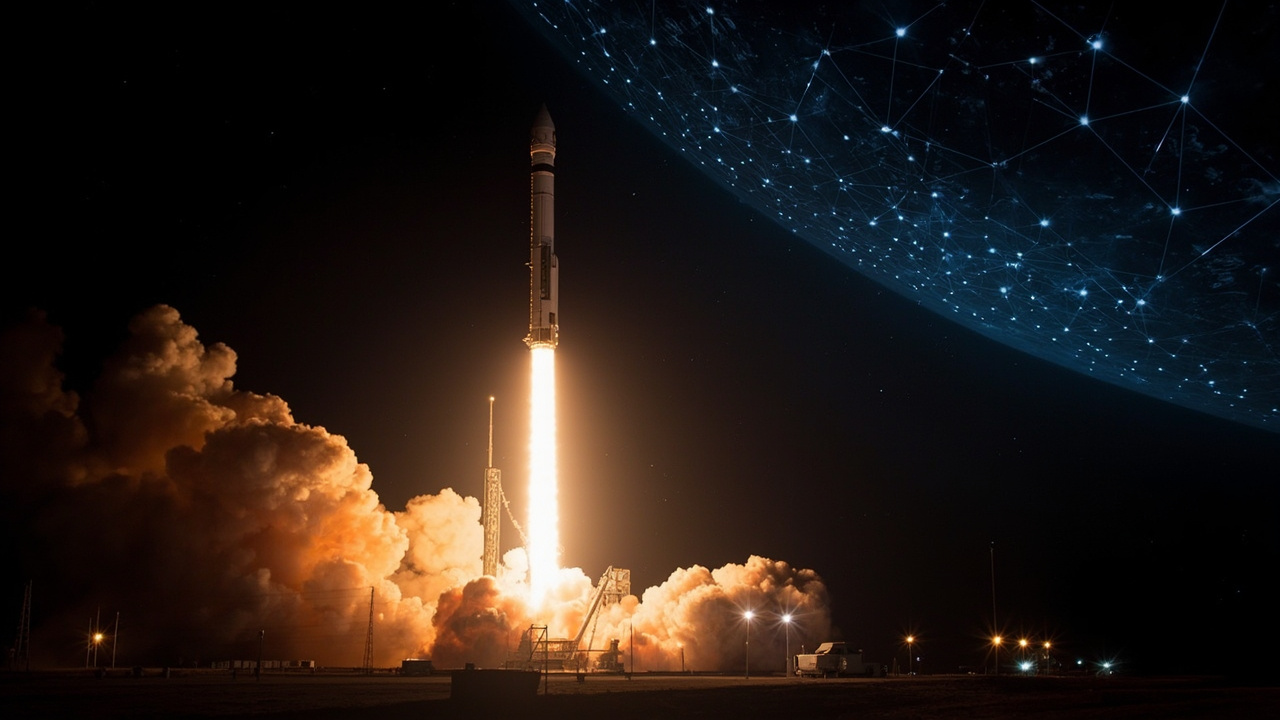
A SpaceX Falcon 9 lifted off from Vandenberg Space Force Base in California on Oct. 10 at 3:39 a.m. EDT, carrying 21 data-transport satellites for the U.S. Space Force's Space Development Agency, according to Space.com.
The mission, known as Tranche 1 Transport Layer A, marked the fourth production launch for the agency's Proliferated Warfighter Space Architecture and the first operational plane of Northrop Grumman-built transport satellites in that network, according to Spaceflight Now.
The flight came one day after NASA released a final request for proposals inviting U.S. companies to design commercial replacements for the International Space Station, with bids due Dec. 8 and awards expected in spring 2027, according to NASA.
Oct. 10 liftoff followed Oct. 5 abort
The Falcon 9 departed Space Launch Complex 4E at 12:39 a.m. local time and flew a southerly trajectory, according to Spaceflight Now. That pad is currently SpaceX's only launch facility on the West Coast, according to Spaceflight Now.
The launch occurred five days after the original Oct. 5 attempt, according to Space.com. That attempt ended in the final minute of the countdown, for reasons the company had not publicly disclosed as of Oct. 10, according to Space.com.
Spaceflight Now reported additional detail on the scrub, stating that an auto-abort halted the countdown with 58 seconds remaining. The hold occurred moments after onboard computers assumed control of the sequence, according to Spaceflight Now.
SpaceX said the hold was called because of off-nominal data on the second stage, according to Spaceflight Now. The rocket was then lowered horizontal at the pad for troubleshooting, and liftoff was postponed one day at a time through the week, according to Spaceflight Now.
SpaceX launch commentator Atticus Vadera said the extra time allowed double checks of vehicle systems and range deconfliction, according to Spaceflight Now. The range issue was believed to involve a missile test from Vandenberg that occurred Friday, according to Spaceflight Now.
Booster B1103 landed at Vandenberg
The mission used first-stage booster B1103, according to Spaceflight Now. The flight was its sixth overall, following the SDA's T1TL-E mission, NROL-179 and three Starlink launches, according to Spaceflight Now.
About seven and one-half minutes after liftoff, B1103 returned to Landing Zone 4 at Vandenberg, according to Spaceflight Now. The touchdown was the 37th landing at that zone and the 668th Falcon booster landing to date, according to Spaceflight Now.
Space.com similarly reported that the stage landed back at Vandenberg a little more than seven minutes after launch. It described the flight as the booster's sixth mission and said its most recent prior flight supported the July Tranche 1 mission for the Space Development Agency, according to Space.com.
SpaceX ended its public webcast shortly after booster touchdown at the request of the Space Development Agency, according to Space.com. Confirmation of satellite deployment therefore awaited a later agency update, according to Space.com.
The Oct. 10 flight was the 111th Falcon 9 launch of the year, according to Space.com. More than 70% of those flights supported Starlink, a broadband constellation then numbering more than 11,000 satellites, according to Space.com.
What T1TL-A adds to the military mesh
T1TL-A is one of 23 missions assigned to SpaceX under the National Security Space Launch Phase 2 contract awarded in August 2020, according to Spaceflight Now. That contract is managed by the Space Force's Space Systems Command, according to Spaceflight Now.
The mission is the fourth to carry production satellites for the Space Development Agency, according to Spaceflight Now. Earlier Tranche 1 Transport Layer launches included T1TL-B on Sept. 10, 2025, T1TL-C on Oct. 15, 2025, and T1TL-E on July 16, 2026, according to Spaceflight Now.
Space Force Col. Ryan Hiserote, a division chief for assured access to space, told Spaceflight Now in September 2025 that those initial transport missions could fly in any order.
The first two of those earlier missions used satellites from York Space Systems, while the October 2025 mission used Lockheed Martin spacecraft, according to Spaceflight Now. The 21 spacecraft on T1TL-A were manufactured by Northrop Grumman and arrived at Vandenberg on Sept. 28, according to Spaceflight Now.
That order makes Northrop Grumman the third manufacturer to place transport satellites into the Pentagon's low-Earth-orbit communications network, according to reporting associated with SpaceNews.
The broader network is called the Proliferated Warfighter Space Architecture, according to Space.com. SpaceX describes it as a mesh of optically linked satellites in low Earth orbit intended to support worldwide military tactical communications and missile warning, indication and tracking, according to Space.com.
Space.com reported that the Oct. 10 liftoff was the fourth of nine SpaceX launches planned to assemble Tranche 1. The agency calls that tranche its initial warfighting-capability tranche, according to Space.com.
When finished, Tranche 1 is expected to contain 154 operational satellites in low Earth orbit, comprising 126 data-transport spacecraft and 28 missile-tracking vehicles, according to Space.com. Four additional missile-defense test satellites will carry a higher-fidelity infrared sensor than the tracking spacecraft, according to Space.com.
Those tracking satellites generally search for heat signatures produced by weapons during flight, according to Space.com.
Space.com reported that 84 of the 126 data-transport satellites had launched through Oct. 10, all aboard Falcon 9 rockets from Vandenberg in September 2025, October 2025, July 2026 and October 2026.
Spaceflight Now, counting the three earlier transport launches, reported 63 satellites in orbit before T1TL-A. Tranche 1 as a whole is expected to include 126 Transport Layer satellites, 28 Tracking Layer satellites and four missile-defense demonstration spacecraft, according to Spaceflight Now.
The agency expects Tranche 1 to begin supplying operational capability to the Defense Department in 2027, according to Spaceflight Now.
How the Transport Layer is supposed to work
The Space Development Agency said the Transport Layer ultimately could include 300 to 500 satellites in low Earth orbit at altitudes from 750 to 1,200 kilometers, according to Spaceflight Now. Once complete, at least two of those satellites would be visible over 95% of the globe at any moment, according to Spaceflight Now.
The spacecraft will connect through optical intersatellite links, which offer substantially greater performance than existing radio-frequency crosslinks, according to Spaceflight Now. The combination of low orbit and optical links reduces path-loss problems and, more importantly, provides much lower latency, which the agency considers critical for time-sensitive targets, according to Spaceflight Now.
The satellites are intended to work with Link-16 and the Integrated Broadcast System to provide threat warnings and situational-awareness information, according to Spaceflight Now.
Agency officials describe the broader acquisition strategy as spiral development, deploying improved capability into a new generation of the architecture every two years under the label of a tranche, according to Space.com.
SDA Director GP Sandhoo, who also serves as Space Force portfolio acquisition executive for missile warning and tracking, said after the July T1TL-E launch that deployment of Tranche 1's proliferated capability would soon deliver continuous overwatch and move data to warfighters worldwide nearly instantaneously, in coordination with Space Systems Command and Space Launch Delta 30, according to Spaceflight Now.
Management of the satellite launches involves System Delta 80 and the Space Force portfolio acquisition executive for assured access to space, according to Spaceflight Now.
NASA asks industry for station plans
Separately, NASA said Oct. 9 that it had released its final request for proposals for commercial space stations intended to preserve a U.S. presence in low Earth orbit after the International Space Station retires, according to NASA.
Administrator Jared Isaacman said the effort aligned with the president's national space policy and would maintain a place for research, technology development, crew training and preparation for Moon and Mars missions, according to NASA. He also said commercial stations could create opportunities for American industry while letting NASA direct more resources toward difficult exploration missions, according to NASA.
The solicitation followed an Ignition event earlier in the year, two requests for information in March, a draft request in July, an industry day and one-on-one meetings with interested companies, according to NASA.
Isaacman said NASA had spent substantial time since Ignition listening to industry about the transition, according to NASA. He said the economics ultimately must work and called for credible plans, strong technical execution and companies willing to invest in destinations able to serve NASA and attract other customers, according to NASA.
Proposals are due Tuesday, Dec. 8, with contract awards expected in spring 2027, according to NASA. NASA intends to issue firm-fixed-price, multi-award indefinite-delivery/indefinite-quantity contracts covering development, certification and services, according to NASA.
Under that structure, NASA would select two or more contractors for early development, followed by a competitive task order for final design, testing, certification and services from one or more contractors, according to NASA. Contractors would be expected to develop destinations capable of end-to-end destination and transportation services for human spaceflight, according to NASA.
What the 360-page station solicitation specifies
Ars Technica reported that the final package comprised about 360 pages and stated NASA's objective as ensuring a sustained human presence in low Earth orbit for science and exploration.
Industry responses are due Dec. 8, with NASA planning to select two or more contractors in this phase and reach a final decision in April, according to Ars Technica. Winners in the first phase are guaranteed at least $100 million, according to Ars Technica.
Expected bidders include Axiom Space, Voyager Space and Vast Space, according to Ars Technica. Blue Origin received funding in an earlier round, although questions remained about its commitment, while SpaceX appeared unlikely to bid for now, according to Ars Technica.
Later phases will be worth billions, according to Ars Technica. Phase 2, beginning next year, will fund development and certification, while Phase 3 will purchase at least four NASA astronaut missions to private stations, according to Ars Technica.
Transportation remains a central commercial question. SpaceX has said it plans to retire Crew Dragon as soon as possible, almost certainly when the station is deorbited in 2030 or 2032, according to Ars Technica. SpaceX operates the only U.S. vehicle currently flying crews and has not offered seats to private-station operators, according to Ars Technica.
Two weeks before the final solicitation, NASA provided an additional $359 million to support Boeing's work to certify Starliner for crewed low-Earth-orbit missions, according to Ars Technica.
Under the new request, station bidders are not required to show a signed transportation contract with Boeing or another provider, or even a letter of intent, according to Ars Technica. NASA offered to furnish transportation for the first four NASA service missions, likely by helping arrange agreements with Boeing, according to Ars Technica.
For 2030, NASA estimated a four-seat crew flight at $325 million and a cargo flight at $300 million, according to Ars Technica.
Marshall Smith, chief executive of Voyager's Starlab station, called the release an important milestone and said the company believed Starlab offered the strongest business and technical path to become the next U.S. station, according to Ars Technica.
An Axiom Space spokesperson said the team was reviewing the request and expressed confidence that its human-spaceflight and hardware experience would support a competitive proposal, according to Ars Technica. A Vast spokesperson said the company looked forward to competing and was in final integration of Haven-1 while working toward a multi-module station able to support continuous human presence, according to Ars Technica.
Sources referenced
- SpaceX launches 21 satellites to orbit for the US military after 5-day delay | Space (https://www.space.com/space-exploration/launches-spacecraft/spacex-falcon-9-rocket-launch-data-transport-satellites-military-proliferated-architecture)
- SpaceX launches 21 data satellites for the Space Development Agency – Spaceflight Now (https://spaceflightnow.com/2026/10/09/spacex-to-make-another-attempt-to-launch-21-data-satellites-for-space-development-agency/)