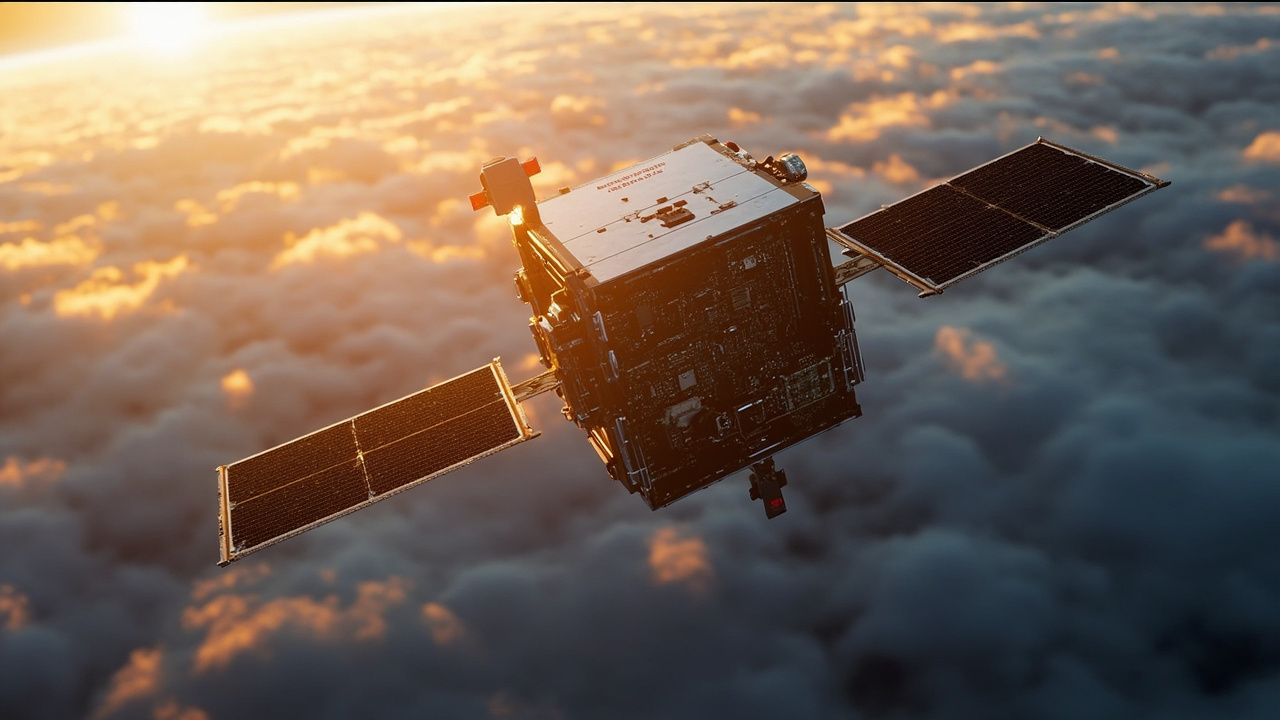
TL;DR: Nashville and Pau Teams Plan Shared Code Flight to Orbit
TL;DR: Blackwing Space and Parsimoni announced September 1, 2026, that they will share one Sparrow nanosatellite to carry multiple independent software payloads to low Earth orbit in Q3 2027.
According to the report titled "Parsimoni | Blackwing Space and Parsimoni Partner on Orbital Software Rideshare Mission," the companies described the effort as a commercial collaboration supporting an orbital software demonstration mission for startups and technology teams seeking flight heritage and on-orbit validation for software, AI, and edge-compute missions.
The announcement, dated in Nashville, Tenn. and Pau, France, said the mission is targeting Q3 2027 and will host multiple independent software payloads on Blackwing Space's Sparrow 2U XL nanosatellite and CM5 Edge Compute Module, powered by a Raspberry Pi Compute Module 5 (CM5).
A Shared Satellite for Software Teams
The mission is designed around one spacecraft carrying code from different customers at the same time, according to the report titled "Parsimoni | Blackwing Space and Parsimoni Partner on Orbital Software Rideshare Mission."
Blackwing Space will provide the nanosatellite platform, edge compute payload, launch services, licensing, mission operations, and mission operations API.
Parsimoni SpaceOS will serve as the mission's payload software environment, supporting customer onboarding, software integration, testing, deployment, and application management.
The same report said the flight will enable customers to demonstrate software, AI inference, machine learning, edge computing, and related technologies in low Earth orbit using a commercial compute environment, without incurring the cost and complexity of a traditional satellite mission.
Why Flight Heritage Is the Hurdle
Many software groups can build and test programs on the ground but still lack an affordable way to show those programs work on real flight hardware in space, according to the report titled "Parsimoni | Blackwing Space and Parsimoni Partner on Orbital Software Rideshare Mission."
That report said access to affordable flight opportunities remains challenging as more space startups build software, AI, autonomy, and edge-compute applications for use in orbit.
Validating software in the space environment still often requires a dedicated spacecraft, custom integration, and significant mission cost, according to the same report.
The companies said this mission is intended to close that gap by giving multiple software teams a practical, lower-cost path to run their applications on real flight hardware and build on-orbit heritage.
What Flies: Sparrow 2U XL and CM5 Module
The spacecraft named for the mission is Blackwing Space's Sparrow 2U XL nanosatellite, according to the report titled "Parsimoni | Blackwing Space and Parsimoni Partner on Orbital Software Rideshare Mission."
The computing payload is the CM5 Edge Compute Module, powered by a Raspberry Pi Compute Module 5 (CM5).
Blackwing Space is building commercial, American-made nanosatellite platforms designed to lower the cost and complexity of getting payloads to space, according to the same report.
The company's stated goal is to make access to orbit faster, more affordable, and more practical for commercial, government, and research teams building what comes next in the Space 3.0 economy.
What Runs: SpaceOS as Payload Software Environment
Parsimoni develops SpaceOS, a secure, hardware-agnostic software environment for deploying, managing, and operating applications on spacecraft, according to the report titled "Parsimoni | Blackwing Space and Parsimoni Partner on Orbital Software Rideshare Mission."
That report said SpaceOS provides app developers and satellite operators with tools to package, deploy, orchestrate, and manage software in orbit, enabling secure and efficient application management throughout the spacecraft lifecycle.
For this rideshare, SpaceOS will handle customer onboarding, software integration, testing, deployment, and application management.
The division of work places spacecraft, compute hardware, launch services, licensing, mission operations, and mission operations API with Blackwing Space, while payload software onboarding and operations software sit with Parsimoni.
Open Hardware Roots for the Compute Board
The CM5 Edge Compute Module was developed for Blackwing Space by Manuel Imboden of Build a CubeSat, according to the report titled "Parsimoni | Blackwing Space and Parsimoni Partner on Orbital Software Rideshare Mission."
That report said the design is based on Pierluigi Colangeli's open-source CM5 MINIMA REV2 design and adapted for Blackwing Space's Sparrow payload interface.
The design will be released under the CERN Open Hardware License v2, according to the same report.
Reservations for a limited number of software payload slots were described as open at blackwingspace.com/missions/software.
Leaders Describe Lower-Cost Path to Orbit
"Our goal is to make flight heritage and on-orbit validation much more accessible for software and compute startups," said Paul Anderson, Founder and CEO of Blackwing Space, according to the report titled "Parsimoni | Blackwing Space and Parsimoni Partner on Orbital Software Rideshare Mission."
Anderson also said that by hosting multiple software payloads on one mission, the companies can provide a more affordable way to prove technology in orbit.
"Working with Blackwing Space creates a practical path for developers to move from ground development to real execution in orbit," said Miklos Tomka, Co-founder and CEO of Parsimoni, according to the same report.
Tomka said deploying software on orbit does not have to be hard, and described the vision as enabling startups to validate their technology easily and securely.
The Space 3.0 Argument Behind Standard Satellites
Anderson, founder and CEO of the Nashville-based company building standardized, mass-manufactured nanosatellite platforms to lower the cost and complexity of getting new technology to orbit, discussed the strategy in the interview titled "Paul Anderson I Blackwing Space."
In that interview, Anderson said the company wants to make it easier, faster, and more affordable than ever to ship new technology to space.
He linked that work to a shift into the Space 3.0 economy in the aftermath of the SpaceX IPO, with more organizations and startups wanting to deploy new products, services, and applications to orbit.
Many of them are priced out behind a paywall to get their technology into space, Anderson said in the same interview, adding that standardized nanosatellite platforms lower both complexity and the economic barrier to entry.
An $8 Billion to $16 Billion Market Left Behind
Over the last two to three years, the American satellite manufacturing base has driven toward larger and larger platforms, according to the interview titled "Paul Anderson I Blackwing Space."
Anderson described those larger systems as multiple tons tailored for kilowatts of power generation.
Those large platforms are great for national security and purpose-built for things like the Golden Dome initiative and the Space Development Agency, he said in the same interview.
In that shift of companies chasing U.S. government contracts, Anderson said an $8 billion to $16 billion addressable market is being left behind, comprising space startups, research labs, universities, and government entities that do not have massive budgets but need to deploy technology to orbit.
From Space 1.0 to Space 2.0 to Space 3.0
Space 1.0 was old space with government-driven, billion-dollar programs and 10-year development timelines, according to the interview titled "Paul Anderson I Blackwing Space."
Over the last five to 10 years, the industry has been in Space 2.0 with more commercial entrants made possible by the lower cost of launch offered by SpaceX's rideshare program, according to the same interview.
In that interview, Anderson said dual use in Space 2.0 ended up meaning the government buying bespoke technology through commercial providers rather than truly repurposing commercial products for government applications, leaving a heavy government focus.
Space 3.0, he said, is where truly broad commercial activity will appear, with an aggressive focus on commercial sales rather than relying on the government to subsidize the business model.
Morse Code Beacons and Orbital Racing
One customer, Manifest Space, is testing an optical beacon that uses Morse code in the sky to identify and track satellites, according to the interview titled "Paul Anderson I Blackwing Space."
Another strategic partner is looking at orbital racing, according to the same interview.
Anderson compared the change to small, mass-manufactured drones unlocking first-person-view drone racing as an entirely new industry.
He said organizations are exploring what orbital racing will look like, both in low Earth orbit and from the Earth to the moon and back, describing those truly commercial applications as carrying tremendous market value.
If It Fits, It Ships
Blackwing's approach centers on a public standard called the Built on Blackwing standard payload interface, according to the interview titled "Paul Anderson I Blackwing Space."
Instead of requiring potential customers to sign an NDA, the company puts the standard on its website for anyone to see.
Anderson said the company wants people building to its specification because they can take advantage of cost savings if they adopt the specification, flipping an industry pattern in which the manufacturer builds to customer requirements.
He likened the idea to a priority mail flat rate box, summarized as: if it fits, it ships.
Buying a Satellite Like a Car or Laptop
Purchasing a satellite should be like buying a car or a laptop computer online, Anderson said, according to the interview titled "Paul Anderson I Blackwing Space."
He described himself as a millennial who buys groceries online and said the industry should pair smaller, mass-manufactured platforms with a modern e-commerce experience.
The comparison used for unmanned hardware was drones and unmanned surface vessels in maritime and aviation, which standardized hardware and software interfaces, made platforms smaller, mass-manufactured them, and paired them with online buying.
For pricing, Anderson pointed to the Tesla Model 3 as an analogy: not a fancy car but with essentials, mass-manufactured, with a price point that made electric vehicles and autonomy features available to the general public.
He said Blackwing does not offer the Cadillac of satellites, but basic capability in a base model with preferred pricing and optional upgrades, with pricing known, transparent, and available on the website.
Fifteen Years Toward an Affordable Bus
Anderson said he has been in the space industry for about 15 years and has worked in the space segment, ground segment, launch segment, and with end users, seeing the enterprise from commercial and government perspectives, according to the interview titled "Paul Anderson I Blackwing Space."
At a previous startup, he said he wanted an affordable bus, planned to build a payload to match the specification, wanted it fast, and wanted to repeat that a hundred times.
He said fielding a proliferated architecture leaves little time and capital for large satellite platforms that are expensive to build, expensive to ship, and expensive to launch.
That experience, he said, supported the case for a smaller, mass-manufactured standard platform that the market can adopt to rapidly field technology.
Platform Uses and Next Reservations
Blackwing Space's affordable, modular platforms are described as accelerating ideas to orbit for commercial, research, and educational missions, according to the report titled "Parsimoni | Blackwing Space and Parsimoni Partner on Orbital Software Rideshare Mission."
The same report listed use cases including Earth observation, communications, edge computing, technology demonstration, and other space-enabled applications in the Space 3.0 economy.
Media contacts listed for the September 1 announcement were Carmen Hughes of Ignite X and Oliver Muoto for Blackwing Space, and Miklos Tomka for Parsimoni.
The announcement said Blackwing Space is now accepting reservations for a limited number of software payload slots at blackwingspace.com/missions/software for the mission targeting Q3 2027.