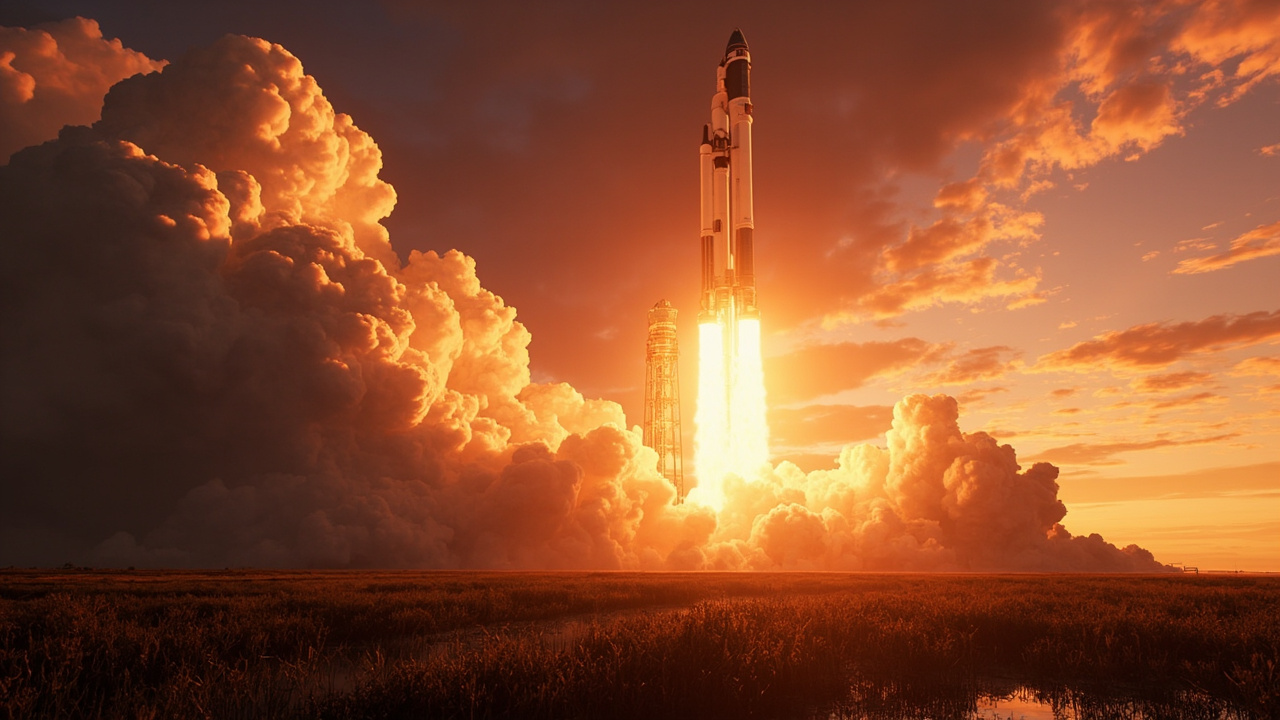
TL;DR: SpaceX has asked the FAA for permission to fly Starship from Starbase, Texas up to 456 times per year, with 912 landings, an 18-fold jump from today's limit of 25 launches.
SpaceX wants to turn its Starbase site in South Texas into a near-daily Starship spaceport.
The company has proposed up to 456 Starship-Super Heavy launches per year from the Boca Chica Launch Site in Cameron County, Texas, according to the Federal Aviation Administration. The plan also calls for up to 912 landings per year at the site. The FAA disclosed the numbers on Oct. 14 in announcing its intent to prepare a Programmatic Environmental Impact Statement for the proposal.
That request would dramatically raise the current ceiling. SpaceX is now authorized for 25 launches per year from Starbase, according to Space.com. The new Phase 2 target is more than 18 times that number and averages more than one orbital liftoff per day across the year.
The FAA emphasized that it is at the earliest stage of review. It has opened a public scoping period and scheduled public scoping meetings, with written comments due under Docket No. FAA-2026-12808. No decision on licensing will follow until the environmental review advances through draft and final documents.
What SpaceX actually requested
The proposal covers launch and landing operations of Starship-Super Heavy at Boca Chica, plus expanded landing and expenditure areas elsewhere, according to the Federal Aviation Administration.
The FAA describes the action in two phases. Phase 1 would allow up to 100 annual launches and up to 200 annual landings, divided as 100 Starship landings and 100 Super Heavy landings. Launches and landings in that phase could take place on any day or at any time of the week.
Phase 2 would allow up to 456 launches and 912 annual landings, divided as 456 Starship landings and 456 Super Heavy landings. Launches could occur at any hour, but only Monday through Friday.
The FAA also says the proposal includes issuance of associated temporary airspace closures. The agency said any increase beyond the levels in this proposal would require a separate environmental review, according to reporting by Teslarati.
Why each launch means two landings
The landing total is double the launch total because Starship uses two reusable stages.
Starship-Super Heavy is composed of Super Heavy as the first-stage booster and Starship as the second stage, the FAA states in its filing summarized by SatNews. Because both elements are designed for recovery and reuse, each mission can produce two landing events.
In normal operations, both the booster and the upper-stage Ship are intended to return to the pad for capture by mechanical tower arms, often called chopsticks, according to Space.com. SpaceX's plan nevertheless preserves other outcomes for the booster: direct return to Starbase, soft water landing in the Gulf of Mexico, or intentional expenditure during flight, according to SatNews.
The upper stage has parallel options. It could land at Starbase, touch down in the Gulf of Mexico or open ocean, or undergo controlled oceanic disposal. The proposal would also allow spacecraft that lift off from other facilities to land at the South Texas complex.
The FAA said the 912-landing figure is the upper limit for the Texas facility regardless of where a mission begins, according to Teslarati. That detail matters because SpaceX envisions vehicles moving between sites as its fleet grows.
From 5 flights to a possible 456
The scale reflects how quickly Starbase regulation has changed.
The facility initially operated under a five-flight annual authorization, according to SatNews. In May 2025, the FAA approved up to 25 Starship launches annually after completing a tiered environmental assessment under the National Environmental Policy Act.
SpaceX is currently authorized for 25 launches and 50 landings annually, according to Teslarati. All current flight tests continue under that existing authorization while the new review is pending, SatNews reported.
Actual flight history remains far below either the current cap or the proposed ceiling. Starship has flown 14 times to date, all test flights from Starbase near Brownsville, according to Space.com. The site has hosted three flights this year and has never launched more than five times in a calendar year, according to Teslarati, citing Bloomberg data.
The most recent flight, Flight 14 on Sept. 28, 2026, reached orbit for the first time and deployed 26 Starlink V3 satellites, Space.com reported. Those satellites are described as the first members of a new broadband constellation that could eventually include 100,000 spacecraft.
Why SpaceX says it needs the cadence
SpaceX links high flight rates to satellite deployment, refueling, and deep-space plans.
Assembling large constellations will require many Starship launches, Space.com reported. Beyond the Starlink V3 network, SpaceX has discussed a planned Starmind AI megaconstellation that Elon Musk has said could contain a million satellites. Musk has also said SpaceX is targeting more than 10,000 Starship liftoffs per year by 2030.
SatNews tied the proposed rate to high-density satellite manifests, orbital propellant-transfer depots, NASA Artemis lunar landings, and long-range Mars transport architectures. In its regulatory notice, the FAA said SpaceX proposes to expand landing and expenditure locations to support evolving needs of the Starship program and broader exploration objectives.
Starship itself stands more than 400 feet, or 122 meters, tall and is the biggest and most powerful rocket ever built, according to Space.com. It is designed to be fully and rapidly reusable, a capability SpaceX believes could transform spaceflight economics if routine reuse is achieved.
The Texas request is only part of a larger launch network. Starbase hosts two orbital pads, according to Space.com. SpaceX is working to bring three Starship pads into service on Florida's Space Coast and aims to break ground next year on a $100 billion, 12-pad complex in Louisiana.
For comparison, the FAA in February approved up to 44 Starship launches per year from Launch Complex 39A in Florida, according to Teslarati. Phase 1 in Texas alone, at 100 launches, would more than double that Florida allowance.
What the environmental review will examine
The FAA will evaluate public safety, national security and foreign-policy concerns, insurance requirements, and potential environmental impact as part of any license or permit decision for Starbase operations.
For this Programmatic Environmental Impact Statement, the scoping process seeks comment on the scope of alternatives and impacts and on relevant information, studies, or analyses, according to the Federal Aviation Administration. The review is expected to weigh air quality, wildlife, coastal resources, water, noise, and aviation, according to Teslarati.
The effort also arrives as federal licensing rules evolve. Earlier in October, the U.S. Department of Transportation proposed targeted revisions to FAA Part 450 launch and reentry regulations to reduce procedural redundancies for high-cadence commercial operators, according to SatNews.
How the public can weigh in
The FAA will hold four in-person public scoping meetings and one virtual meeting in November.
Two in-person meetings are scheduled for Tuesday, Nov. 17, 2026, from 1 to 3 p.m. and 5:30 to 7:30 p.m. Central Time at Texas Southmost College, Jacob Brown Auditorium, 600 International Blvd. in Brownsville, Texas, according to the Federal Aviation Administration. Two more in-person meetings will follow Thursday, Nov. 19, at the same times at the Port Isabel Event and Cultural Center, 309 Railroad St. in Port Isabel, Texas.
A virtual meeting is scheduled for Wednesday, Nov. 18, 2026, from 5:30 to 7:30 p.m. Central Time. Registration is required for the virtual session through the link posted by the agency.
At in-person meetings, the FAA plans a presentation during the first half hour, followed by an open-house format with information stations, according to the Federal Aviation Administration. Attendees may give verbal comments to a court reporter or submit written comments on a form. At the virtual meeting, attendees may provide oral comments for up to three minutes after the presentation, with a moderator facilitating.
English and Spanish versions of the presentation will be made available on the project page no later than Nov. 10, 2026. Requests for additional accommodations beyond planned Spanish translation were due by Nov. 2 to [email protected].
Written comments may be submitted electronically at regulations.gov under Docket No. FAA-2026-12808 or by mail to Amy Hanson, FAA Environmental Protection Specialist, SpaceX Boca Chica, c/o Kimley Horn, 767 Eustis Street, Suite 100, St. Paul, MN 55114. The Federal Register notice sets written comments due Nov. 30, according to Teslarati.
A draft statement will be released for public comment at a later date, and the FAA has not announced when that document will appear.
Sources referenced
- SpaceX Starship Super Heavy Project at the Boca Chica Launch Site | Federal Aviation Administration (https://www.faa.gov/space/stakeholder_engagement/spacex_starship)
- SpaceX wants to launch Starship more than 450 times per year from South Texas | Space (https://www.space.com/space-exploration/launches-spacecraft/spacex-wants-to-launch-starship-more-than-450-times-per-year-from-south-texas)