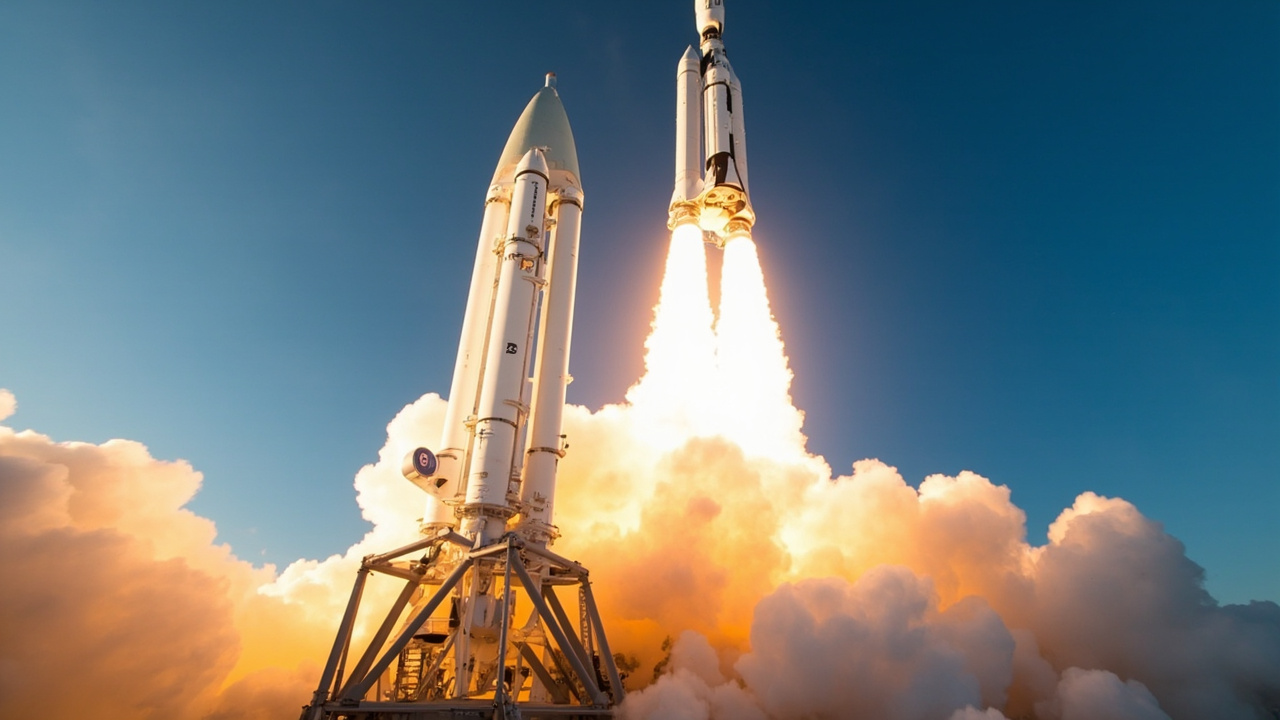
TL;DR: NASA gave SpaceX $946 million for three more astronaut flights to the International Space Station — Crew-15, Crew-16 and Crew-17 — lifting the company's crew-transport total to 17 missions and $5.92 billion through 2030.
NASA locked in U.S. crew transportation to the end of the space station era on Sept. 18, 2026, when it added three more SpaceX rotation flights to its commercial crew contract, according to NASA.
The action is a firm fixed-price, indefinite-delivery/indefinite-quantity modification to the Commercial Crew Transportation Capability (CCtCap) agreement. It covers Crew-15, Crew-16 and Crew-17, with a period of performance running through 2030 and mission readiness dates in 2027 and 2028, according to NASA. The agency said the change brings SpaceX's mission total under CCtCap to 17 and raises the total CCtCap contract value with the company to $5.92 billion.
Agency officials said the extension supports regular crew transportation and continued station access with two distinct American industry partners, according to NASA. That two-provider approach has been central to the Commercial Crew Program since its start.
What the $946 million buys
The $946 million figure covers all three missions and related mission services, not only the rocket ride uphill, according to NASA.
Included in the price are ground operations, launch, in-orbit operations, and return and recovery operations, according to NASA. Each flight also includes cargo transportation and a lifeboat capability while the vehicle remains docked to the International Space Station, according to NASA.
Under the arrangement, SpaceX uses its Dragon spacecraft and Falcon 9 rocket to transport up to four astronauts, along with critical cargo, to the station, according to NASA. While docked, the capsule serves as an emergency escape vehicle for its assigned crew.
The structure means NASA is purchasing a complete crew-rotation service. Preparation of astronauts and spacecraft on the ground, launch, mission operations in space, bringing crews home and recovering the capsule are all part of the contracted work, according to Reuters reporting carried by Investing.com. Supplies carried up and the emergency escape role at the station are also included in that definition.
NASA described the deal as a sole-source modification. The agency noted that it does not preclude seeking future contract modifications for additional transportation services as needed, according to NASA. The award followed a notice of intent issued in May to purchase the additional missions, according to NASA.
A bridge to 2030 for station operations
The timing ties directly to NASA's planning horizon for the International Space Station.
The period of performance for the three new flights runs through 2030, according to NASA. Mission readiness dates fall in 2027 and 2028, a detail added when NASA updated its announcement on Sept. 18, according to NASA.
That schedule places Crew-15, Crew-16 and Crew-17 in the final years of planned station operations. NASA and its international partners currently plan to retire the ISS in late 2030 or early 2031, although the U.S. Congress has pushed to extend operations through 2032, according to Space.com.
The station therefore needs assured crew rotations until its final crew departs. By ordering the flights now, NASA secures seats, hardware production, launch slots and recovery teams well in advance. Human spaceflight missions require long-lead planning for training, manifesting, safety reviews and vehicle processing, and the multi-year readiness window reflects that cycle.
The extension also preserves continuity after a period in which one commercial vehicle carried most of the operational load. NASA said the change helps maintain access with two unique commercial crew industry partners, according to NASA. Even with SpaceX flying the newly ordered missions, Boeing remains the designated second provider under the broader commercial crew strategy.
How SpaceX became NASA's workhorse
SpaceX's current position results from a decade-long public-private partnership.
In 2014, NASA awarded CCtCap contracts to Boeing and SpaceX as part of the Commercial Crew Program, according to NASA. The agency looked to the two companies to fill the crew-carrying role left by the space shuttle, which retired in 2011, according to Space.com. A central goal was restoring regular domestic launch capability after years of reliance on Russia's Soyuz spacecraft, according to Reuters reporting carried by Investing.com.
Under CCtCap, NASA certifies that a provider's transportation system meets agency requirements before it flies astronauts on operational missions, according to NASA. SpaceX first launched astronauts to the ISS on the Demo-2 mission in May 2020 using Falcon 9 and Crew Dragon, according to Space.com. NASA certified that system for operational missions in November 2020, according to NASA.
Since certification, SpaceX has completed 11 operational astronaut flights to the station, according to Space.com. Its twelfth crew rotation mission, Crew-12, was in orbit and docked to the station at the time of the September award, according to NASA. The company was also preparing Crew-13 for launch in early October, according to Space.com. Another industry report cited by Quartz noted Crew-14 targeting a flight the following spring, underscoring the steady cadence of roughly two crew rotations per year shared across available vehicles and international partners.
That flight rate explains why three additional missions matter. Crew-12 in orbit, Crew-13 nearing launch and Crew-14 in preparation account for near-term needs, while Crew-15 through Crew-17 cover the later part of the decade. The new modification takes SpaceX through Crew-17, according to Space.com.
Where Boeing's Starliner stands
The second half of NASA's two-provider plan remains a work in progress.
Boeing, like SpaceX, received a CCtCap contract in 2014, according to Space.com. Its Starliner capsule flew its first crewed test mission to the ISS in June 2024, according to Space.com. The flight did not go according to plan after Starliner suffered thruster issues and other problems on the way to the orbiting laboratory, according to Space.com.
The mission's two crewmembers — NASA astronauts Suni Williams and Butch Wilmore — ultimately returned to Earth in a Crew Dragon in March 2025, according to Space.com. What had been planned as a roughly 10-day mission became a more than nine-month station stay for the pair, according to Reuters reporting carried by Investing.com. NASA returned the Starliner capsule empty, according to that same reporting.
NASA still had not certified Starliner for operational astronaut missions at the time of the September 2026 award, according to Space.com. It remained unclear when the capsule would fly again, according to Space.com. Nevertheless, Starliner remains part of the agency's commercial crew plans, as indicated by NASA's reference to maintaining access with two industry partners, according to Space.com.
Maintaining two independent American crew systems was intended to provide redundancy if one vehicle stands down for technical review, schedule delays or safety concerns. The recent history illustrates that logic: when Starliner could not bring its test crew home, Dragon provided the ride.
What comes after the station
NASA expects to need crewed orbital transportation even after the ISS is gone.
The agency is encouraging development of commercial space stations in low Earth orbit, which would serve as destinations for NASA astronauts and potentially other visitors, according to Space.com. Those future platforms would still require vehicles capable of carrying people and cargo, launching, docking, remaining on orbit and returning safely.
Crew Dragon, however, is unlikely to serve that later market for long. SpaceX plans to retire the capsule in 2030 or thereabouts, according to Ars Technica as cited by Space.com. The company intends to shift its duties, along with much of its other spaceflight work, to the fully reusable Starship megarocket, according to Space.com.
That transition creates a clear handoff challenge for U.S. orbital flight. The newly ordered Dragon missions cover NASA through Crew-17 and through 2030, according to NASA and Space.com. Beyond that point, station retirement, Dragon retirement and the arrival of commercial destinations converge within a short span.
For now, the award gives NASA, SpaceX teams, suppliers and station partners a fixed manifest to work toward. Three crews will train, three Dragons and three Falcon 9s will be prepared, three launches will head for low Earth orbit, and three recoveries will close out the final chapter of NASA crew rotations to the ISS alongside whatever Boeing contributions follow.
Sources referenced
- NASA Awards SpaceX Three Crew Flights to Space Station - NASA (https://www.nasa.gov/missions/station/commercial-crew/nasa-awards-spacex-three-crew-flights-to-space-station/)
- NASA awards SpaceX $946 million for 3 more astronaut missions to the ISS | Space (https://www.space.com/space-exploration/human-spaceflight/nasa-awards-spacex-usd946-million-for-3-more-astronaut-missions-to-the-iss)