TL;DR: NASA, SpaceX and international partners cleared Crew-13 for liftoff no earlier than 11:10 a.m. EDT on Oct. 1, 2026, from Cape Canaveral to begin a roughly six-month station mission.
NASA's next crew rotation to the International Space Station passed its final prelaunch gate on Sept. 30, 2026. According to NASA's update titled "NASA, SpaceX Conclude Review, Crew-13 'Go' for Launch," NASA, SpaceX and international partner teams finished the Launch Readiness Review and polled "go" to enter the launch count. The decision keeps Crew-13 on track for liftoff no earlier than 11:10 a.m. EDT Thursday, Oct. 1, from Space Launch Complex 40 at Cape Canaveral Space Force Station in Florida aboard a SpaceX Falcon 9 rocket and Dragon spacecraft.
Mission leaders scheduled a news conference for 6 p.m. on Sept. 30 to discuss the review outcome, to be streamed on NASA's YouTube channel. According to NASA, participants included Lori Glaze, associate administrator for the Human Spaceflight Mission Directorate at NASA Headquarters; Dana Weigel, manager of the Low Earth Orbit Program at NASA Johnson; Mathieu Caron, director of Astronauts, Life Sciences, and Space Medicine for the Canadian Space Agency; and William Gerstenmaier, vice president for Build and Flight Reliability at SpaceX. Live launch coverage was planned to begin at 9:20 a.m. EDT on Oct. 1 through NASA channels, including the agency's live page.
The flight will carry four people: NASA astronauts Jessica Watkins and Luke Delaney, Canadian Space Agency astronaut Joshua Kutryk, and Roscosmos cosmonaut Sergey Teteryatnikov. According to the Canadian Space Agency report titled "Crew-13: Road to launch," Kutryk is making his first spaceflight, while the four crewmembers are expected to live and work aboard the station for about six months.
Four-person crew heads to station for six months
Watkins serves as commander and Delaney as pilot, with Kutryk and Teteryatnikov assigned as mission specialists. According to NASA, the mission is SpaceX's 13th crew rotation mission for NASA and the company's 14th flight carrying NASA astronauts to the station when the Demo-2 test flight is included.
The crew combination brings together two NASA astronauts, one Canadian astronaut and one Russian cosmonaut. That makeup reflects the long-running crew-exchange and partner-seat approach used for station rotations, with NASA, the Canadian Space Agency and Roscosmos all represented on the same Dragon. NASA identified Watkins as commander and Delaney as pilot, while the Canadian Space Agency listed Kutryk alongside Watkins, Delaney and Teteryatnikov as the four people who will live aboard the orbiting laboratory.
The six-month duration makes Crew-13 a long-duration science mission rather than a short visiting flight. According to the Canadian Space Agency, the crew finished formal mission training before entering the final prelaunch period, then continued reviewing procedures, preparing for mission tasks and supporting operational activities while in quarantine.
Final reviews gave formal permission to proceed
The Sept. 30 Launch Readiness Review was the second major readiness gate in less than a week. According to NASA, NASA, SpaceX and international partners had already polled "go" to continue launch preparations following the Flight Readiness Review at NASA's Kennedy Space Center in Florida on Sept. 25.
NASA described the Flight Readiness Review as an in-depth assessment of SpaceX's transportation system, mission operations, support functions and readiness of the International Space Station to support the incoming crew. The Sept. 30 Launch Readiness Review then confirmed that the teams were ready to proceed into the countdown.
The sequence is standard for NASA Commercial Crew missions: a broad flight-readiness assessment, arrival of the crew at the launch site, pad processing and engine testing, a rehearsal, and then a launch-day readiness poll. For Crew-13, those steps fell between Sept. 25 and Sept. 30, preserving the Oct. 1 target.
Crew arrived in Florida on Sept. 26
According to NASA, Watkins, Delaney, Kutryk and Teteryatnikov touched down at NASA's Kennedy Space Center in Florida at 12:56 p.m. EDT on Sept. 26, following a flight from NASA's Johnson Space Center in Houston that included a brief refueling stopover in Mississippi.
According to the Canadian Space Agency report titled "Crew-13: Road to launch," the crew began quarantine on Sept. 17 in Houston, Texas. The agency said the astronauts flew themselves in two T-38 fighter jets to Kennedy Space Center on Sept. 26 and continued quarantine at the Neil Armstrong Operations and Checkout Building.
NASA said the crew members would spend the remaining days before launch in quarantine and conducting final preflight operations at Kennedy. A crew-arrival media event featuring the crew and representatives from NASA Kennedy and the agency's Low Earth Orbit Program was streamed on NASA Kennedy's YouTube channel.
Rocket rolled out Sept. 27 and fired engines
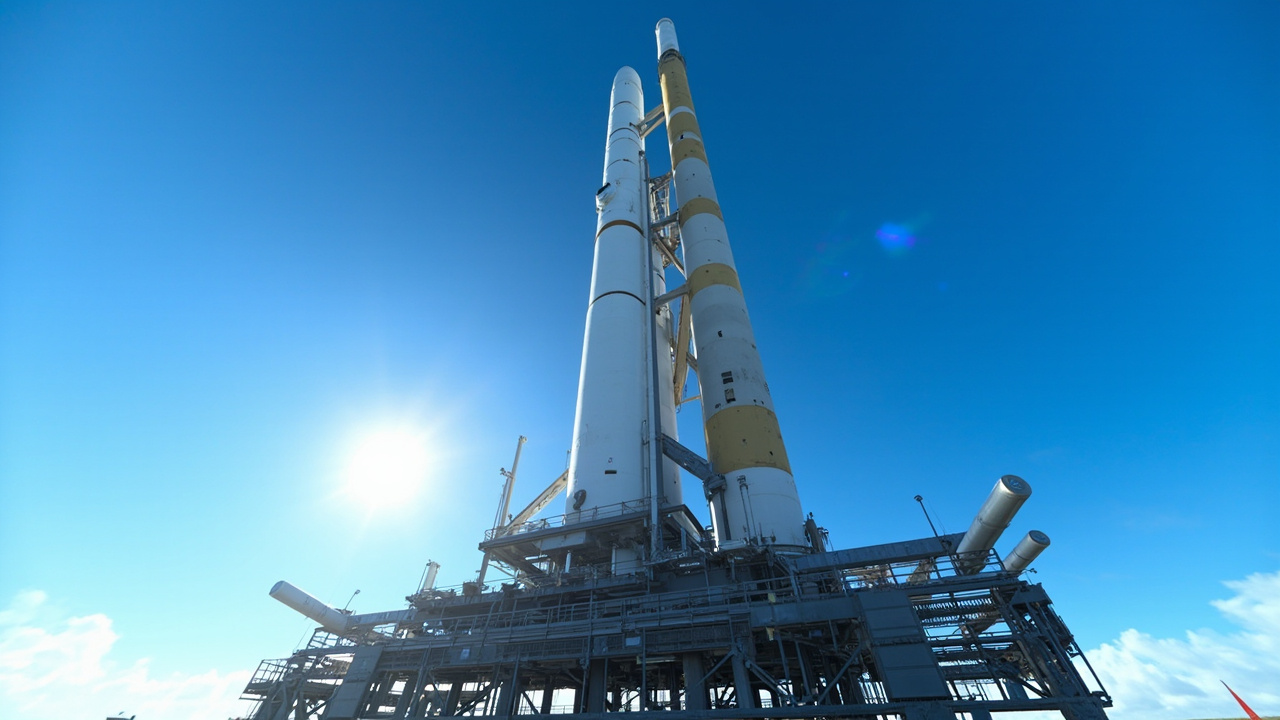
Pad processing moved quickly after crew arrival. According to the Canadian Space Agency, the Falcon 9 rocket and Dragon spacecraft assigned to Crew-13 were assembled inside a hangar and then rolled out horizontally on a transporter erector to Space Launch Complex 40 on Sunday, Sept. 27. Once at the pad, the vehicle was raised vertical into launch position.
NASA noted that the Falcon 9 with Dragon atop stood vertical at the pad on Sept. 27. The Canadian Space Agency said the mission team then performed a static fire test, firing all nine Merlin engines for approximately 10 seconds. Engineers evaluate pressure, thrust levels and ignition timing, among other indicators, to assess the health of the Falcon 9.
The static fire is a brief hold-down firing that does not commit the vehicle to flight. It gives propulsion and launch teams measured data on engine ignition and performance before the vehicle is cleared for crew boarding and fueling on launch day.
Dress rehearsal completed Sept. 29
On Sept. 29, Crew-13 members completed a dry dress rehearsal. According to the Canadian Space Agency, the astronauts put on spacesuits, traveled to the launch pad and boarded the spacecraft while the mission team monitored the vehicle and practiced countdown operations. During the operation the rocket was not fueled, which is why the exercise is called a dry rehearsal.
The rehearsal tests crew movement, suit fit and ingress, communications, seatstrapping, hatch operations and coordination between the flight crew, pad team and flight controllers. According to the Canadian Space Agency, completion of those tests left Crew-13 ready for launch pending the final readiness review and launch-day operations.
Why this rotation matters for U.S. crew transport
Crew-13 is flying at a time when SpaceX's Crew Dragon is the only currently operational U.S. astronaut ferry ship. According to Spaceflight Now in its report titled "NASA plans unpiloted Starliner test flight at end of year," NASA wants to bring Boeing's Starliner back into service to ensure sustained U.S. capability to carry astronauts and researchers to the International Space Station through its planned retirement in 2030.
Spaceflight Now reported that NASA is working with Boeing to launch an unpiloted Starliner capsule in the December-January time frame to test upgrades ordered after a 2024 mission suffered multiple propulsion-system failures. If the unpiloted test goes well, NASA and Boeing hope to launch a piloted Starliner flight in mid-2028, with redesigned propulsion-system valves, more robust subsystems and other modifications.
The context underscores why steady Crew Dragon rotations remain central. Spaceflight Now quoted Weigel saying it had always been the Commercial Crew Program's goal to have two crew transportation providers to ensure commercial access to low Earth orbit. The same report quoted NASA managers saying that, as SpaceX has publicly stated that Dragon and Falcon will not be around forever, certifying Starliner is important both for station support and for future commercial destinations.
The Starliner history remains recent. According to Spaceflight Now, astronauts Barry "Butch" Wilmore and Sunita Williams, both now retired from NASA, launched aboard Starliner on June 5, 2024, for what was billed as a 10-day test flight. It was the first piloted Starliner launch after two uncrewed test flights that both had problems.
During rendezvous, the crew encountered multiple propulsion-system helium leaks and thruster failures. They docked, but return was repeatedly delayed while teams studied the problems. An independent review board later classified the propulsion mishaps as a "close call" that put the astronauts in jeopardy, according to Spaceflight Now.
The Starliner returned to Earth without its crew three months after launch. Wilmore and Williams remained aboard the station for an additional six months to return aboard a Crew Dragon on March 18, 2025. What had been expected to last 10 days lasted 286 days in total.
Spaceflight Now reported that investigators identified three major problems: five thrusters in the service module failed during rendezvous, causing a temporary loss of full maneuverability blamed on Teflon "poppets" extruding in propellant valves and restricting flow; a thruster in the crew module failed during the unpiloted descent, leaving the ship without redundancy in a critical system; and helium leaks occurred in pressurization plumbing. The board also concluded the design lacked required redundancy in the system for the firing needed to drop the spacecraft out of orbit.
Boeing said those issues are being addressed, including replacement of valves in all 12 crew-module maneuvering thrusters, measures to prevent erosion, redesigned service-module thruster poppets, a faster flight-data recorder, upgraded batteries and improved parachutes. Boeing said in a post on X, as quoted by Spaceflight Now: "Together with @NASA, we're making Starliner hardware enhancements and adding resources for human spaceflight certification."
Veteran astronaut Warren "Woody" Hoburg will command the future piloted Starliner mission, with other crew members to be named later, according to Spaceflight Now. The planned unpiloted mission, designated Starliner 1, is expected to rendezvous and dock with the station.
How to follow launch day
NASA said launch-day coverage for Crew-13 would stream beginning at 9:20 a.m. EDT on Oct. 1, with updates on the mission blog, @NASAKennedy on X and NASA Kennedy on Facebook. The Sept. 30 leadership news conference was also set to stream on NASA's YouTube channel.
For readers in the U.S., the central facts are time, place and vehicle: no earlier than 11:10 a.m. EDT Oct. 1, Space Launch Complex 40 at Cape Canaveral Space Force Station, Falcon 9 and Dragon, with four crew members bound for about six months aboard the International Space Station.
Sources referenced
- NASA, SpaceX Conclude Review, Crew-13 'Go' for Launch - NASA (https://www.nasa.gov/blogs/commercialcrew/2026/09/30/nasa-spacex-conclude-review-crew-13-go-for-launch/)
- Crew-13: Road to launch | Canadian Space Agency (https://www.asc-csa.gc.ca/eng/news/articles/2026/2026-09-29-crew-13-road-to-launch.asp)