How to Watch NASA's September Sky Events
TL;DR: NASA's September lineup runs Sept. 14-26 with a Moon tour of Antares and the Teapot, Venus at peak brilliance Sept. 18, International Observe the Moon Night Sept. 19, the equinox Sept. 22, and a Harvest Moon with Saturn and Neptune Sept. 26.
NASA is pointing American skywatchers toward a two-week observing run in the second half of September 2026, with the Moon as the guide star for the first stretch and bright planets anchoring the rest of the month.
According to Lake County News, California, which published NASA Jet Propulsion Laboratory's monthly "What's Up" briefing by Raquel Villanueva, the agency lists four headline targets: a Sept. 14-20 Moon tour past Antares and the Teapot asterism, Venus at peak brilliance Sept. 18, the September equinox Sept. 22, and the Harvest Moon near Saturn and Neptune Sept. 26, plus International Observe the Moon Night Sept. 19.
That timing makes early planning practical. Darkness is arriving earlier each evening by September, and mild evening temperatures in most locations allow longer time outside with binoculars or a backyard telescope, according to Live Science. The same report notes the Milky Way remains visible overhead and changing seasons can increase chances of seeing the northern lights, though finding a clear sky remains the central challenge.
Sept. 14-20: Let the Moon find Antares and the Teapot
From Sept. 14 through Sept. 20, NASA advises using the Moon as a signpost about an hour after sunset, looking south to find the Moon in the evening sky.
Night by night, the Moon shifts position against the background stars, passing near Antares. Antares is described as a bright, reddish star marking the heart of the constellation Scorpius.
Next in the sequence is the Teapot, a group of stars in neighboring Sagittarius that resembles a teapot, complete with a handle, lid and spout. The Teapot is an asterism rather than a formally classified constellation, a distinction summarized in The Classroom overview of NASA's briefing.
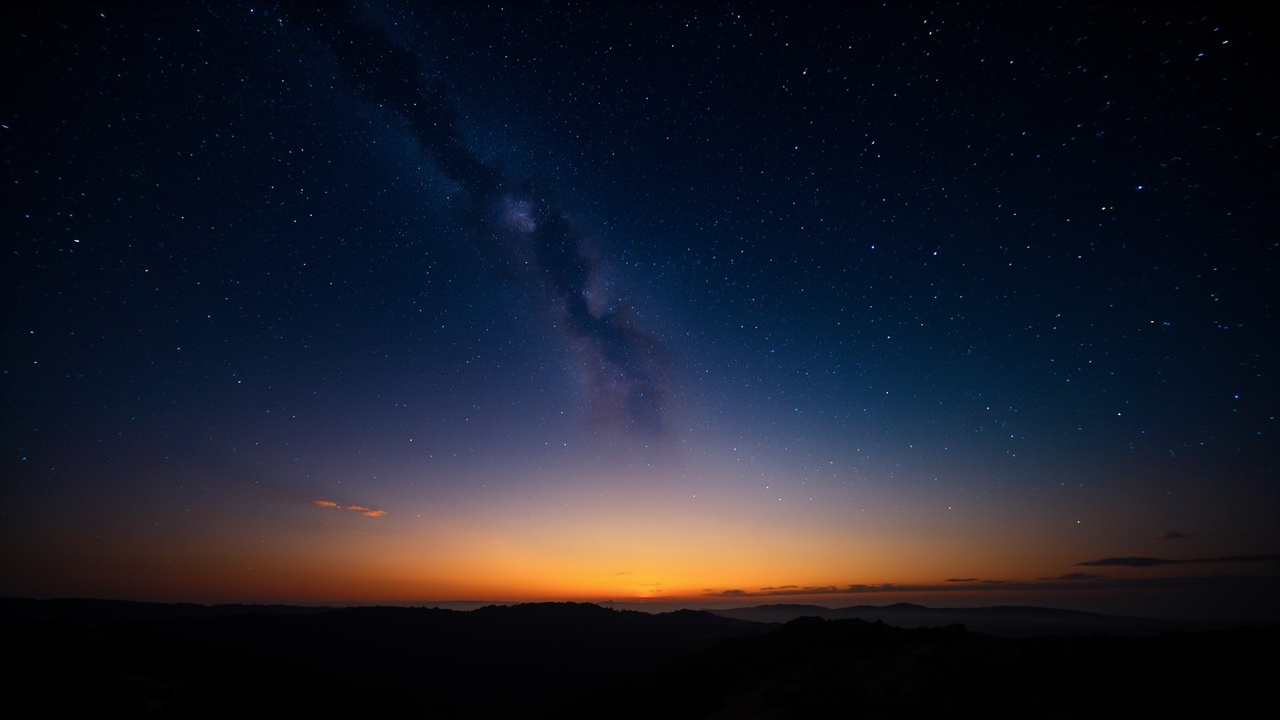
Under an especially dark sky, observers may see hazy steam rising from the Teapot's spout. Follow that steam to its thickest part, and the line of sight points toward the center of the Milky Way galaxy.
The core of the Milky Way may also become visible during this stretch under dark skies with little light pollution. NASA does not promise that view from every location because visibility depends on local darkness, so travel away from streetlights improves the odds.
The Moon's position also shifts noticeably from one night to the next during the Sept. 14-20 window. Noting exact time and direction each night builds a systematic observation record for students and first-time observers.
Venus hits peak brilliance Sept. 18
Look west on Sept. 18 as Venus hits peak brilliance, shining at its brightest of this evening appearance.
Shortly after sunset, Venus will stand out as a brilliant point of light low above the western horizon, outshining every star around it. A clear view of the horizon will give the best chance to catch it before it sets.
Venus reaches peak brilliance during its current evening appearance on Sept. 18, making it the easiest bright object after the Moon for a beginner to pick out. NASA's briefing does not specify an exact compass position or duration of visibility after sunset for every location, so local timing should be checked.
The broader context is a farewell performance as an evening object. Venus has served as the unmistakable Evening Star since late March, and in June it helped stage a striking three-planet lineup after sundown, outshining both Jupiter and Mercury, according to Space.com.
Now the planet is sinking night by night and will trade its evening role for a morning one before October is over. All month long, the planet slides lower in the southwest after sunset, shortening the window for a good view.
Specific September markers from Space.com include Sept. 7, when Venus set about one and one-quarter hours after sunset on Labor Day; Sept. 14, when skywatchers can look low in the west-southwest 30 to 45 minutes after sunset as a waxing crescent Moon appears around five and one-half degrees to the left of Venus; Sept. 18, when Venus reaches greatest brilliancy at magnitude minus 4.8 near the horizon; and late September, when the planet slips quickly from view, setting just 35 minutes after sundown by month's end.
For observers at mid-northern latitudes, the finale is especially low. Around 40 degrees north latitude, Venus will stand only about five and one-half degrees above the southwest horizon at sunset by the end of September. That height is barely more than half the width of a clenched fist held at arm's length.
Through a telescope, Venus now shows a narrowing crescent as its sunlit side turns farther away from Earth. That crescent grows thinner and longer, becoming a delicate arc of brilliant light, and very steady binoculars may reveal the shape during the next couple of weeks, though low altitude will make the view shimmer and blur.
Sept. 19: International Observe the Moon Night
On Sept. 19, NASA invites participation in International Observe the Moon Night.
People around the world are invited to look up and connect with the nearest celestial neighbor while learning more about lunar science, exploration, and the many ways the Moon has shaped cultures around the world. Participants can find an event nearby or learn how to participate from wherever they are at go.nasa.gov/ObserveTheMoon.
The back-to-back timing with Venus is convenient. Sept. 18 and Sept. 19 fall one day apart, so a classroom or family can treat them as paired observing nights and check whether a local library, planetarium or astronomy club is hosting a public session for the Moon night.
The Moon also passes close to several bright planets during September. It passed Jupiter before dawn on Sept. 8 and will nudge Venus after dark on Sept. 13 and 14, according to Live Science.
Sept. 22: Equinox changes the seasons
Then on Sept. 22, it is officially fall in the Northern Hemisphere while spring begins in the Southern Hemisphere.
That is the September equinox, when the Sun is directly above Earth's equator and day and night are close to equal in length around the world. From there, daylight keeps getting shorter in the Northern Hemisphere and longer in the Southern Hemisphere.
The equinox marks the exact instant the center of the Sun crosses the plane of Earth's equator. In 2026, that instant falls at 00:05 UTC on Sept. 23, which converts to 5:05 p.m. PDT on Sept. 22, so both Sept. 22 and Sept. 23 dates are correct depending on time zone, according to The Classroom summary of NASA Night Sky Network material.
On the day of an equinox, an observer standing on the equator sees the Sun directly overhead at noon, and sunlight reaches both hemispheres almost equally. It is one of only two times each year the North and South Poles are simultaneously lit.
After that point, nights become longer than days across the Northern Hemisphere until the winter solstice on Dec. 21. That shift, not Earth's distance from the Sun, drives changing seasons.
As an occasional bonus, auroras tend to occur more frequently around the equinoxes. During this time, the orientation of Earth's magnetic field creates favorable conditions for interactions with the solar wind that causes auroras, but there are never any guarantees.
Sept. 26: Harvest Moon meets Saturn and Neptune
And on Sept. 26, the Harvest Moon takes center stage, rising in the east shortly after sunset.
It will not be alone. Saturn appears nearby, with faint Neptune completing a wide triangle in the sky.
Saturn is the easy one and can be seen with just the eyes. Neptune is more challenging. At around magnitude 8, it is too faint to see with the unaided eye, so binoculars or a telescope are needed to spot it. Darker skies and good observing conditions can help bring it into view.
Live Science notes the full Harvest Moon rises on Sept. 26, with Saturn following after it minutes later. Neptune reaches opposition on Sept. 26, meaning it is on the opposite side of Earth as the Sun, offering the closest and most direct viewing opportunity.
September also offers all five planets visible to the naked eye during the month, although not simultaneously. Venus and Mercury are visible in the evening, while Mars and Jupiter come out in the morning. Saturn is visible for much of the night.
How to plan each watch
NASA's lineup runs from Sept. 14 through Sept. 26, giving students, teachers and families a nearly two-week window rather than a single night to catch. The Moon, Venus, Saturn and the Harvest Moon are accessible without optical aid, while Neptune at roughly magnitude 8 requires binoculars or a telescope.
For the Moon tour, prioritize a southern view about an hour after sunset from Sept. 14-20. For Venus on Sept. 18, prioritize a clear, low western horizon shortly after sunset. For the Harvest Moon on Sept. 26, look east shortly after sunset for the Moon, then locate Saturn nearby and use optics and dark skies for Neptune.